While turkey tail mushrooms (Trametes versicolor) are not a cure for cancer, a growing body of research suggests that specific compounds derived from this mushroom — particularly polysaccharide K (PSK) and polysaccharopeptide (PSP) — may play a supportive role when used alongside conventional cancer treatments.
Most clinical research has examined turkey tail extracts as adjunct therapies, meaning they are used in combination with treatments such as chemotherapy or radiation rather than as standalone interventions. Some studies have reported improvements in immune response, treatment tolerance, and certain survival outcomes in specific cancer populations, though results vary depending on cancer type, stage, and treatment protocol.
Medical note:
This article is for educational purposes only and does not constitute medical advice. Turkey tail supplements should never replace evidence-based cancer treatments. Patients should always consult their oncologist or qualified healthcare professional before adding any supplement to their care plan.
What Are Turkey Tail Mushrooms?
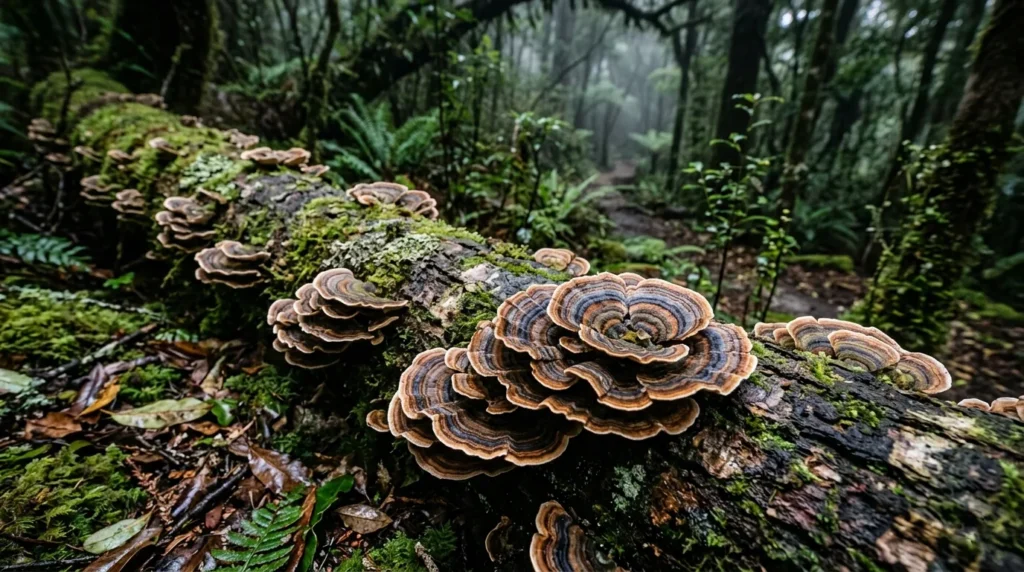
Turkey tail mushrooms are common fungi that grow on dead or decaying wood worldwide. Their name comes from their distinctive fan-shaped fruiting bodies, layered with vivid brown, orange, and blue hues resembling a turkey’s tail feathers. These mushrooms have been used in traditional Chinese and Japanese medicine for centuries, primarily for immune support and general health.
The key compounds responsible for their medicinal effects are complex polysaccharides, notably polysaccharide K (PSK) and polysaccharopeptide (PSP). These bioactive compounds are being studied for their ability to influence immune activity and support the body’s response to disease within clinical care settings.
👉 Learn more about Turkey Tail mushroom and their benefits & uses
How Turkey Tail Extracts Are Being Studied in Cancer Care
1. Immune System Modulation
The primary way turkey tail mushrooms help combat cancer is by stimulating the immune system. PSK and PSP enhance the activity of immune cells, including:
- Natural Killer (NK) cells: These cells seek out and destroy abnormal cells, such as cancer cells.
- T cells: These coordinate immune responses and help identify and neutralize cancer cells.
- Macrophages: These engulf pathogens and dead cells and trigger other parts of the immune system.
Turkey tail compounds bind to specific immune receptors like complement receptor 3 (CR3), effectively “arming” the immune cells to better recognize and destroy tumor cells.
2. Potential Effects on Survival and Quality of Life
Clinical research, primarily conducted in Asia, has investigated PSK as an adjunct to chemotherapy in certain cancers, most notably gastric cancer. In Japan, PSK has been approved for use alongside standard treatment in specific clinical settings, where some studies have reported longer disease-free intervals and improved survival compared with chemotherapy alone.
It is important to interpret these findings carefully. Outcomes differ across studies, and benefits are not universal for all cancers or patient populations. Researchers generally view turkey tail extracts as supportive agents that may enhance immune function and help some patients better tolerate treatment rather than as direct anti-cancer therapies.
3. Cancer Areas Studied in Research
Turkey tail extracts have been studied across several cancer types, though the strength of evidence varies.
- Gastric cancer: The most substantial research exists here, with multiple clinical trials evaluating PSK alongside chemotherapy. Some analyses suggest improved survival outcomes when used as an adjunct therapy.
- Breast cancer: Early-phase clinical studies have explored immune recovery following chemotherapy and radiation. While findings are promising, larger trials are needed to confirm clinical benefit.
- Lung and colorectal cancers: Meta-analyses and controlled studies have examined immune markers, treatment tolerance, and survival trends. Results suggest potential supportive effects, but researchers emphasize the need for further high-quality trials.
Overall, the evidence is strongest when turkey tail extracts are used in combination with standard oncology care, not as replacements for it.
Proposed Biological Mechanisms
Laboratory and translational studies suggest that compounds found in turkey tail may influence several biological pathways relevant to cancer care. These include modulation of inflammatory responses, support for immune signalling, and effects on cellular processes involved in tumor progression.
However, many mechanistic findings come from preclinical or experimental settings. While they help explain how turkey tail compounds might function in the body, clinical outcomes remain the most important measure of real-world benefit.
Safety and Clinical Considerations
Turkey tail mushrooms are generally regarded as safe and well tolerated. Clinical trials have reported minimal side effects, usually mild gastrointestinal symptoms in some users. However, because they influence the immune system, cancer patients, especially those on immunosuppressive drugs or certain targeted therapies, should consult their healthcare providers before starting supplementation.
Proper medical guidance ensures that turkey tail mushrooms are integrated effectively into a patient’s cancer treatment plan without interactions or unexpected complications.
Current Research and Clinical Trials
Turkey tail mushrooms have been the subject of increasing scientific interest. Several clinical trials are ongoing to optimize dosing, formulations, and to further clarify which types and stages of cancer best benefit from turkey tail supplementation.
Turkey tail extracts continue to be investigated within integrative oncology research. For example, studies referenced by the U.S. National Cancer Institute have explored immune recovery and treatment tolerance in certain cancer populations, while ongoing academic research is examining optimal dosing strategies and patient selection.
This research may pave the way for broader clinical adoption and development of standardized, high-quality turkey tail-based therapies.
What the Evidence Does Not Yet Show
Despite promising research, turkey tail extracts are not established cancer treatments. Many studies are limited by size, population type, or clinical design, and results are not universally consistent across all cancers.
Current evidence does not support using turkey tail as a replacement for surgery, chemotherapy, radiation, or other evidence-based oncology therapies. Instead, researchers continue to investigate where supportive supplementation may be appropriate within medically supervised care.
How to Use Turkey Tail Mushrooms
Turkey tail is available in capsules, powders, teas, and concentrated extracts. Clinical research has typically focused on standardized extracts containing measured levels of PSK or PSP, as these compounds are believed to drive immune activity.
Extraction methods significantly influence bioavailability. Hot-water or dual-extraction processes help release polysaccharides from the mushroom’s fibrous structure, making them easier for the body to absorb.
Turkey tail supplements should be viewed as complementary tools rather than substitutes for medical treatment. Anyone undergoing cancer therapy — particularly those taking immunomodulating medications — should seek guidance from their healthcare provider before use.
Conclusion
Current evidence suggests that turkey tail extracts — particularly those standardized for PSK or PSP — may offer supportive benefits when integrated into conventional cancer care. Research has explored their role in immune modulation, treatment tolerance, and selected survival outcomes, though effectiveness varies across clinical contexts.
Turkey tail should not be considered a cure for cancer. Instead, it represents an area of ongoing scientific interest within integrative oncology. Patients interested in supplementation should work with qualified healthcare professionals to ensure safe and appropriate use alongside established treatments.
Key Takeaways
• Turkey tail extracts are being studied primarily as adjuncts to conventional cancer treatment — not as cures.
• Research has focused on immune modulation and treatment tolerance in specific clinical populations.
• Evidence is strongest for standardized extracts containing PSK or PSP.
• Outcomes vary depending on cancer type, treatment protocol, and patient factors.
• Patients should always consult qualified healthcare professionals before using supplements during cancer care.
References:
- Kidd PM. The use of mushroom glucans and proteoglycans in cancer treatment. Altern Med Rev. 2000;5(1):4-27.
- Block KI, Mead MN. Immune system effects of echinacea, ginseng, and astragalus: a review. Integr Cancer Ther. 2003;2(3):247-267.
- Mizuno T. Bioactive biomolecules of mushrooms: food function and medicinal effect of polysaccharides, proteins, lipids, and triterpenoids. Food Function. 2011;2(3-4):161-172.
- Sliva D. Medicinal mushrooms and cancer therapy: Translational bioactive compounds from bench to bedside. Pharmacol Res. 2018;138:204-216.
- National Cancer Institute. Mushrooms and Cancer. Cancer.gov article.
- Torkelson CJ et al. Phase 1 clinical trial of Trametes versicolor in women with breast cancer. Integr Cancer Ther. 2012;11(4):312-319.
Choosing a Quality Turkey Tail Extract
Clinical research has typically examined standardized extracts containing measured levels of bioactive polysaccharides such as PSK or PSP. When evaluating supplements, factors such as extraction method, beta-glucan content, raw material quality, and third-party testing may influence overall product reliability.
For readers seeking an example of a turkey tail extract aligned with these research-informed quality markers, you can review the product below.
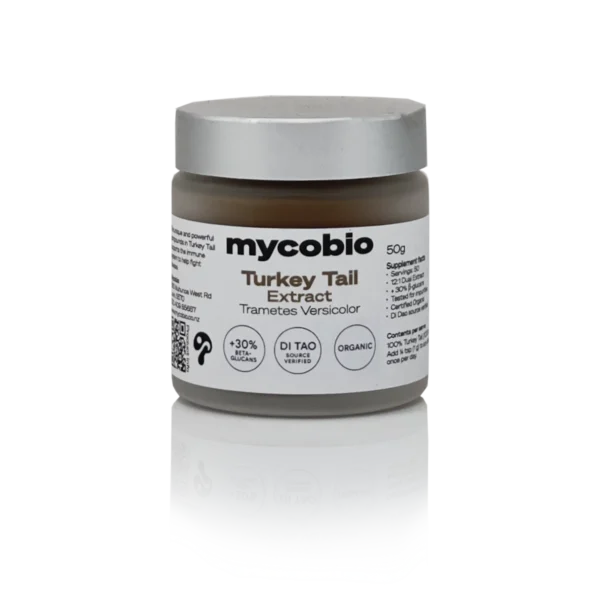
Turkey Tail Extract
High-potency Turkey Tail extract
≥30% β-glucan · 12:1 dual extract · lab tested
Supports immune function and microbiome balance through clinically relevant compounds including β-glucans and PSP.
Use for
✔ Immune system support
✔ Moderate immune system response
✔ Oncology adjunct support