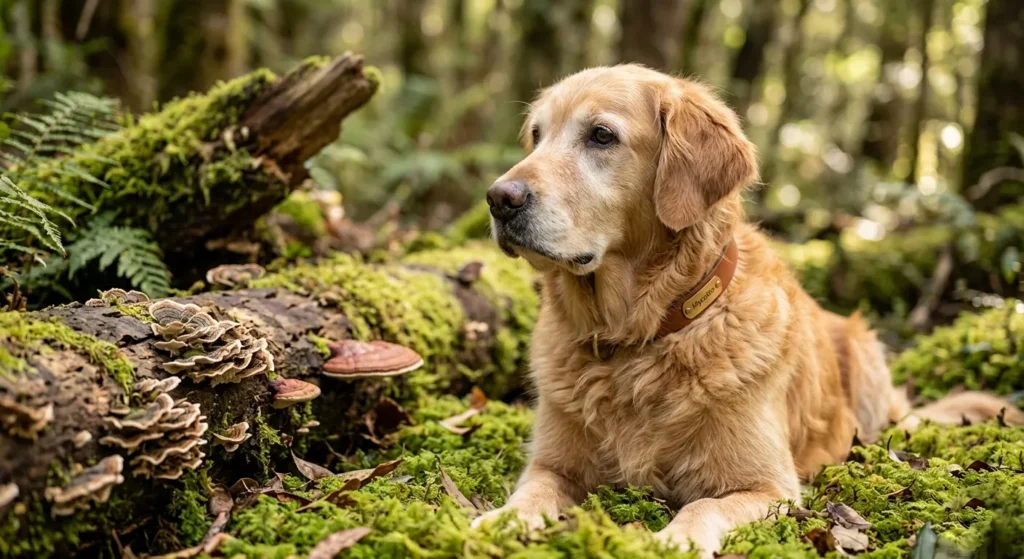
As our dogs live longer, we are seeing a rise in Canine Cognitive Dysfunction (CCD), often described as the canine version of Alzheimer’s. Symptoms like disorientation, changes in sleep patterns, and “getting stuck” in corners are distressing for both the dog and the owner.
While cognitive decline was once considered an inevitable part of aging, research into Lion’s Mane (Hericium erinaceus) is revealing a natural way to support neural plasticity and brain health.
>> Learn about or Lion’s Mane supplement for aging dogs
Beyond Basic Nutrition: The Power of Hericenones and Erinacines.
Lion’s Mane is unique in the fungal kingdom because it contains two specific classes of compounds that can cross the blood-brain barrier: hericenones and erinacines. These compounds are known as neurotrophic factors. They stimulate the synthesis of Nerve Growth Factor (NGF), a protein that is essential for the maintenance, survival, and regeneration of neurons. In a dog’s brain, NGF acts like “biological fertilizer,” supporting the health of existing neurons and encouraging the growth of new neural connections.
Managing Canine Cognitive Dysfunction (CCD)
Chronic inflammation and oxidative stress are the primary drivers of brain aging. Lion’s Mane works on three distinct fronts to protect the senior canine brain:
- Myelin Sheath Support: NGF is crucial for the health of the myelin sheath—the protective coating around nerve fibers. Healthy myelin ensures that electrical signals travel quickly and accurately through the nervous system.
- Reducing Amyloid Plaque: Preliminary studies suggest that Lion’s Mane may help reduce the accumulation of amyloid-beta plaques in the brain, which are closely linked to the “brain fog” and disorientation seen in senior dogs.
- Antioxidant Protection: The brain is highly susceptible to oxidative damage. The polysaccharides in Lion’s Mane act as potent antioxidants, neutralizing free radicals that would otherwise damage delicate brain tissue.
Focus and Training: Benefits for Younger Dogs
While the neuroprotective benefits are vital for seniors, Lion’s Mane isn’t just for aging pets. By supporting neural connectivity and dopamine levels, it can assist with:
- Focus during training: Helping “high-drive” dogs stay on task.
- Anxiety reduction: Supporting a balanced nervous system response to environmental stressors.
The Mycobio Standard: Dual-Extraction is Key
To reach the brain, the bioactive compounds in Lion’s Mane must be highly concentrated. Because erinacines are primarily found in the mycelium and hericenones in the fruiting body, a comprehensive pet supplement should ideally utilize a high-quality, dual-extracted process to ensure the full spectrum of neuro-active compounds is present and bioavailable.
>> Learn about our Lion’s Mane extract used in this product
References & Research
- Neurotrophic Properties of Hericium erinaceus in Mammalian Nerve Cells – A foundational study showing how Lion’s Mane stimulates NGF synthesis, with implications for all mammals, including canines.
- The Effects of Hericium erinaceus on Cognitive Decline in a Clinical Setting – While conducted in a human cohort, this study is frequently cited in veterinary neurology to explain the mushroom’s impact on cognitive scores and memory recovery.
- Peripheral Nerve Regeneration and Fungal Extracts – Evidence-based research highlighting how Hericium erinaceus supports the repair of the myelin sheath and nerve signaling.
- Dietary Supplementation with Mushroom Polysaccharides for Canine Brain Health – A veterinary review discussing the role of functional mushrooms in managing age-related neuroinflammation in dogs.
- Neuroprotective effects of Hericium erinaceus against Amyloid-beta induced toxicity – Research detailing the mushroom’s ability to protect brain cells from the plaques associated with cognitive dysfunction.