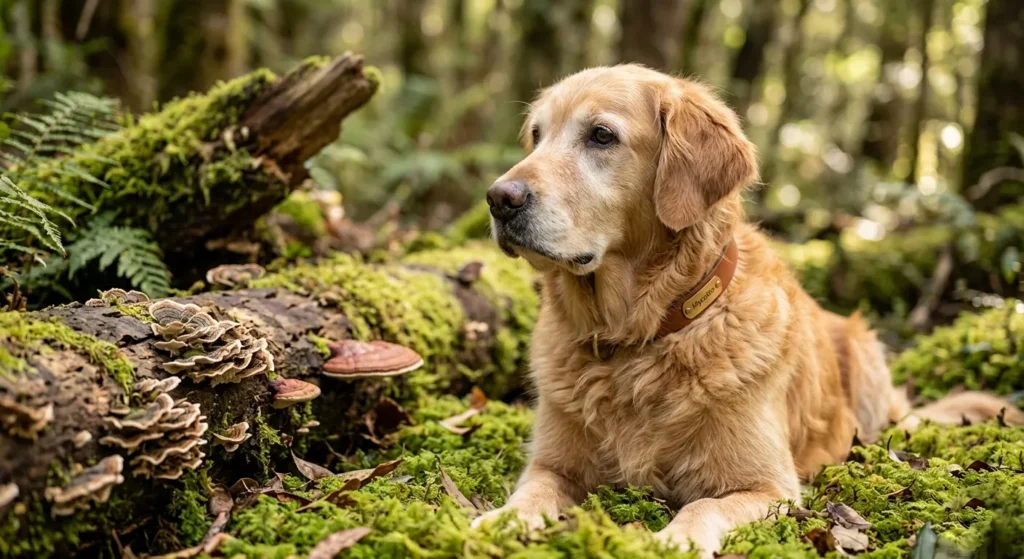
Calming the Itch: How Functional Mushrooms Support Canine Skin Health
For many New Zealand dog owners, the change of seasons or a romp through the long grass often leads to a familiar, frustrating sound: the persistent thump-thump-thump of a dog scratching. Canine atopic dermatitis and seasonal skin sensitivities are among the most common reasons for vet visits. While many reach for quick-fix steroids or synthetic antihistamines, functional mushrooms—specifically Reishi and Cordyceps—offer a natural, multi-targeted approach to calming the inflammatory itch-scratch cycle from the inside out.
>> Learn about our Reishi mushroom supplement for dogs
The Mast Cell Connection: Reishi as a Natural Antihistamine
The “itch” is essentially a chemical communication error. When a dog with skin sensitivities encounters an allergen (like pollen, dust mites, or certain grasses), their mast cells “degranulate,” releasing a flood of histamine. Histamine triggers the redness, heat, and intense itching that leads to self-trauma and secondary skin infections.
Reishi (Ganoderma lucidum) is uniquely equipped to handle this. It contains specialized triterpenes (ganoderic acids) that have been shown to act as natural mast-cell stabilizers. Unlike synthetic drugs that block histamine receptors, Reishi helps prevent the excessive release of histamine at the source. This makes it an invaluable tool for dogs suffering from environmental allergies or “hot spots.”
Cordyceps and the Skin Barrier
While Reishi manages the immediate allergic response, Cordyceps (Cordyceps militaris) works on the underlying inflammatory stress. Skin issues are often a visible sign of systemic inflammation. Cordyceps contains cordycepin, a bioactive compound that modulates the production of inflammatory cytokines.
By lowering the systemic inflammatory “volume,” Cordyceps helps the body focus resources on repairing the skin barrier. A stronger skin barrier means fewer allergens can penetrate the surface, reducing the frequency of future flare-ups.
The Gut-Skin Axis: Why Digestion Matters for Itching
Modern veterinary research has identified a profound link between gut health and skin health, known as the gut-skin axis. If a dog’s microbiome is out of balance, it can lead to “leaky gut,” where pro-inflammatory particles enter the bloodstream and trigger skin irritation.
Mushrooms are rich in prebiotic beta-glucans. These fibers feed the beneficial bacteria in your dog’s gut, supporting a robust microbiome. By stabilizing the gut, you are indirectly cooling the skin. This holistic approach ensures that you aren’t just treating the symptom (the scratch) but are addressing the inflammatory root cause.
Strategic Benefits for Dog Skin Care
- Reduces Redness: By inhibiting pro-inflammatory enzymes like COX-2, mushroom extracts help take the “heat” out of irritated skin.
- Breaks the Itch-Scratch Cycle: Stopping the itch prevents the dog from biting and scratching, which allows the skin to heal naturally.
- Supports Fur Regrowth: By reducing the inflammation of the hair follicles, functional mushrooms provide a healthy environment for coat recovery.
Quality and Extraction for Topical vs. Internal Support
For skin health, internal supplementation is the most effective long-term strategy. However, the bioavailability of the supplement is critical. Ensure your mushrooms are dual-extracted (hot water and alcohol) to ensure the triterpenes—the key “anti-itch” molecules—are actually accessible to your dog’s digestive system.
>> Learn about our Reishi Extract
Authoritative References & Research
- Anti-allergic and Anti-inflammatory Properties of Ganoderma lucidum in a Murine Model of Allergic Dermatitis – This study demonstrates how Reishi triterpenoids specifically target mast cell degranulation and histamine release.
- Cordycepin: A Bioactive Compound for Modulating Skin Inflammation – Research into how Cordyceps extracts reduce inflammatory signaling in dermal tissues.
- Beta-Glucans and the Gut-Skin Axis: A Review of Fungal Prebiotics – An exploration of how maintaining a healthy microbiome through fungal polysaccharides improves systemic skin conditions.
- Efficacy of Mushroom-Derived Compounds in Veterinary Dermatology – A clinical perspective on using medicinal mushrooms as part of an integrative approach to canine atopy.
- Immunomodulatory Effects of Triterpenes on Mast Cell-Mediated Type I Allergic Reactions – A technical breakdown of how Reishi’s chemical components interact with the mammalian immune system to reduce allergic response.