The Wonders of Black Garlic: How It’s Made, What Research Says, and Why People Love It
Black garlic has gone from a niche culinary curiosity to a widely appreciated functional food. With its soft texture, rich umami sweetness, and growing scientific profile, it sits at the meeting point of flavour, tradition, and research.
This article explores what black garlic is, how it is made, and what current research says about its potential benefits. If you would like to explore our own product, see our Mycobio Black Garlic page.
What Is Black Garlic?
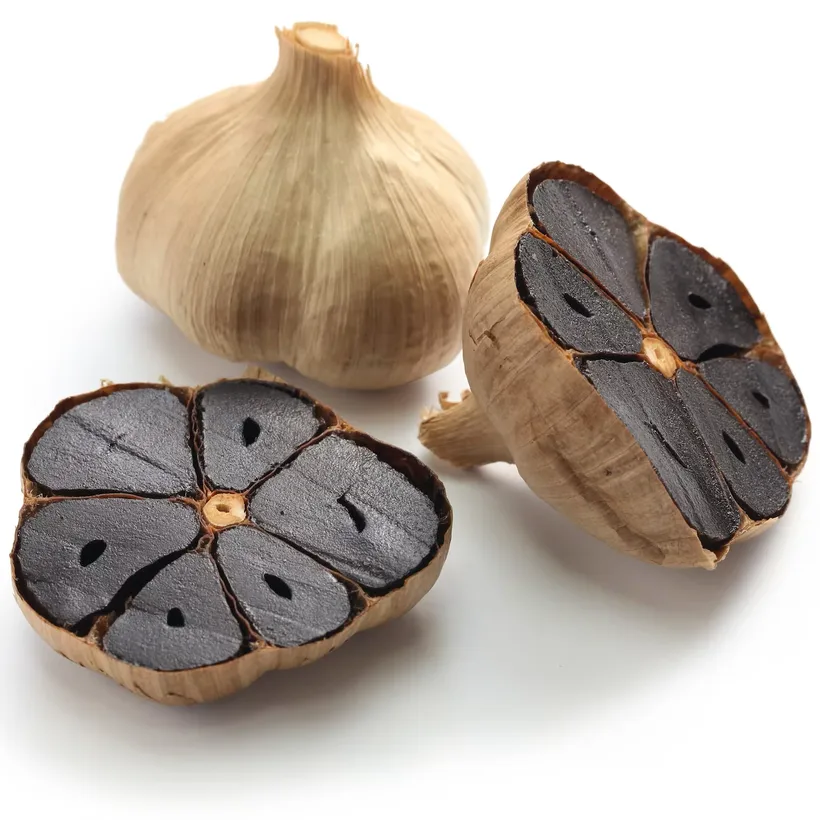
Black garlic is made by slowly ageing whole garlic bulbs under controlled heat and humidity over a period of days or weeks. During this process, the cloves darken, soften, and develop a deep, sweet, savoury flavour.1
Although black garlic is often described as “fermented”, the transformation is more accurately driven by heat-assisted ageing and associated chemical reactions, including Maillard-type browning reactions. These reactions alter both the flavour and the chemical profile of the garlic.1
How Black Garlic Is Made
Fresh garlic is placed in a warm, humid environment and held there under carefully controlled conditions. As the bulbs age, moisture, temperature, and time work together to change the garlic’s colour, texture, aroma, and composition.4
The result is a product that is very different from raw garlic. The sharp bite softens. The cloves become dark and tender. The flavour shifts toward balsamic, tamarind, molasses, and umami notes.
Just as importantly, some of garlic’s sulfur compounds are transformed into more stable compounds, including S-allyl cysteine (SAC), which is one of the most studied bioactive compounds associated with black garlic.2
Why Black Garlic Is Chemically Different from Fresh Garlic
Fresh garlic is known for compounds such as alliin and allicin, which contribute to its pungency and biological activity. During the ageing process, the concentration and balance of these compounds changes. Black garlic typically contains higher amounts of stable water-soluble organosulfur compounds such as S-allyl cysteine, alongside shifts in polyphenols, flavonoids, and antioxidant capacity.2
This matters because researchers are especially interested in compounds that are both biologically active and relatively stable. SAC has drawn attention because it has been associated in the literature with antioxidant, anti-inflammatory, cardioprotective, neuroprotective, and hepatoprotective effects, although much of the broader mechanistic evidence still comes from preclinical research.2
What Research Says About Black Garlic
1. Antioxidant activity
One of the most consistent themes in the research is black garlic’s antioxidant potential. Review literature describes black garlic as rich in antioxidant compounds and notes that the ageing process can enhance antioxidant activity compared with fresh garlic.1 This is one reason black garlic is often discussed as a functional food rather than simply a culinary ingredient.
2. Inflammation and cellular stress
Research also points to anti-inflammatory and oxidative-stress-related effects. These findings are promising, but they should be interpreted carefully because many studies are laboratory-based or preclinical rather than large human clinical trials.12
3. Cardiovascular interest
Human studies on aged black garlic have explored possible benefits relating to cardiovascular risk markers. In one randomized crossover trial involving adults with moderately elevated LDL cholesterol, an optimized aged black garlic extract was associated with improvements in some cardiovascular risk parameters, including blood pressure-related outcomes.3 This is encouraging, though it does not mean black garlic should be viewed as a replacement for medical treatment.
4. Bioactive sulfur compounds
Research into thermal processing has also focused on how best to produce black garlic with higher SAC content, because SAC is treated as an important quality marker in black garlic products.5 This helps explain why processing method matters so much: black garlic is not just “old garlic”, but a carefully transformed food.
Black Garlic as a Functional Food
What makes black garlic especially interesting is that it combines culinary appeal with a growing body of scientific interest. It can be eaten straight from the clove, added to meals, or used more intentionally during winter as part of a broader food-first wellness routine.
Its appeal is not just about one isolated compound. It is the overall transformation of the garlic — flavour, texture, and chemistry together — that gives black garlic its distinctive place in the world of functional foods.
Why People Take Black Garlic in Winter
Garlic has a long history of traditional use during the colder months. Black garlic offers a gentler, sweeter, and more approachable form for people who enjoy garlic but do not want the harsh pungency of raw cloves. While modern research does not justify exaggerated cold-and-flu claims, it does support black garlic’s relevance in discussions around antioxidant status, inflammation, and general wellness support.2
Frequently Asked Questions
Is black garlic fermented?
It is often described that way, but the process is more accurately understood as controlled heat ageing with associated browning reactions rather than classic microbial fermentation.4
What does black garlic taste like?
Black garlic is mild, sweet, savoury, and umami-rich, often compared to balsamic glaze, tamarind, or molasses with roasted garlic notes. We call it candy for grown-ups.
Is black garlic healthier than fresh garlic?
They are different rather than simply better or worse. Black garlic contains a different balance of compounds and may have higher antioxidant activity in some contexts, while fresh garlic retains its own distinct chemistry.2
Why is S-allyl cysteine important?
S-allyl cysteine is one of the most studied sulfur compounds associated with black garlic. It is valued in the literature for being relatively stable, water-soluble, and biologically active.5
Can black garlic cure a cold?
No responsible article should claim that. Black garlic is best understood as a functional food with promising bioactive compounds, not as a cure or substitute for medical care. However research suggests it may help alleviate symptoms.
Footnotes
- Ahmed, T. et al. (2021). Black Garlic and Its Bioactive Compounds on Human Health Diseases: A Review. Molecules, 26(16), 5028. https://pmc.ncbi.nlm.nih.gov/articles/PMC8401630/ ↩
- Yudhistira, B. et al. (2022). S-Allyl cysteine in garlic (Allium sativum). Heliyon. https://pubmed.ncbi.nlm.nih.gov/35355410/ ↩
- Valls, R.M. et al. (2022). Effects of an Optimized Aged Garlic Extract on Cardiovascular Disease Risk Factors in Moderately Hypercholesterolemic Patients: A Crossover Randomized Clinical Trial. Nutrients. https://pmc.ncbi.nlm.nih.gov/articles/PMC8838962/ ↩
- Pakakaew, P. et al. (2022). The shortest innovative process for enhancing the S-allylcysteine content and antioxidant activity of black garlic using an aqueous γ-cyclodextrin solution. Scientific Reports. https://www.nature.com/articles/s41598-022-15635-3 ↩
- Manoonphol, K. et al. (2023). Effect of Thermal Processes on S-Allyl Cysteine Content in Black Garlic. Foods, 12(6), 1227. https://www.mdpi.com/2304-8158/12/6/1227 ↩